
Robotic Partial Knee Replacement/MAKO
Our Advanced Robotic Knee Replacement Solutions in Texas
Knee pain may initially be only a minor ache or stiffness, but it can become a significant impediment to your favorite activities if it worsens. If you’ve sought relief through medication, physical therapy, or injections but still have pain, surgery might be the next step. Texas Institute of Orthopedic Surgery & Sports Medicine offers advanced robotic knee replacement solutions for our patients in the Lone Star State. Thanks to improvements in medical technology, our expert surgeons have tools that make knee replacement more precise and personalized than ever before. Keep reading to learn how robotic technology is changing knee surgery and helping people get back on their feet.
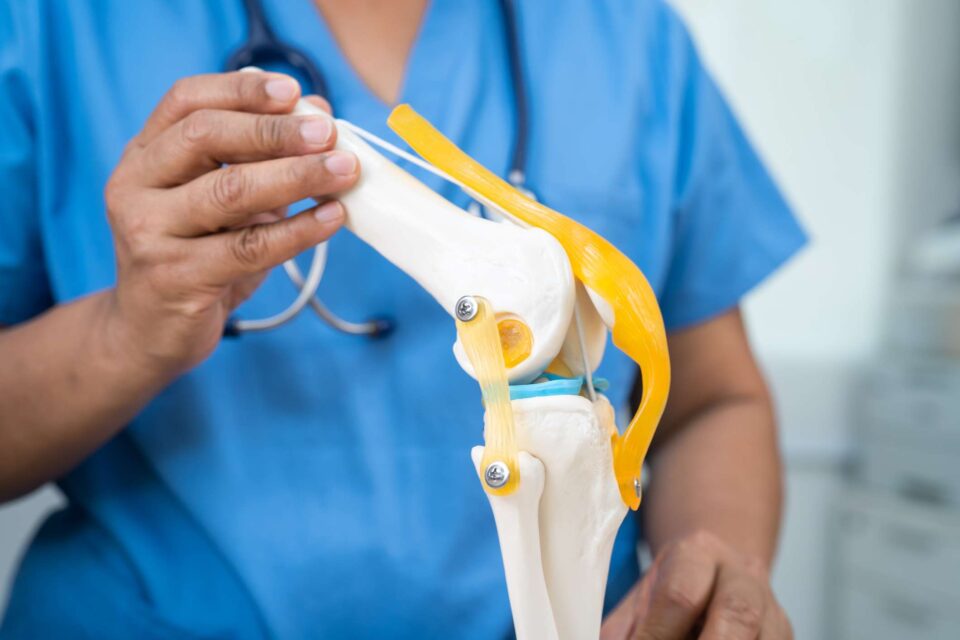
What Is MAKO Knee Replacement Technology?
You may picture a robot independently performing surgery when you hear about “robotic surgery.” That’s a common misconception. In reality, the MAKO knee replacement technology we use doesn’t replace our surgeons. It simply helps improve their accuracy. The MAKO system uses a robotic arm that the surgeon guides during a procedure. Meanwhile, the system provides real-time data and feedback, which helps the surgeon place the knee implant in the exact right spot based on a patient’s specific anatomy. Such a high level of accuracy helps ensure the new knee feels natural and works well for years.
Who’s a Candidate for Robotic Knee Replacement Surgery?
Not everyone with knee pain needs surgery. However, if you have osteoarthritis that hasn’t improved with other treatments, you might be a candidate. MAKO is often used for partial knee replacements, which treat early- to mid-stage osteoarthritis. During a consultation, a doctor can help determine if this technology is right for you. You’re likely a good candidate for MAKO personalized knee replacement surgery if:
- You have knee pain with activity and even while resting
- Your knee creates a grinding noise or feeling when you move
- You have stiffness or swelling that won’t go away
- Non-surgical treatments like rest, weight loss, physical therapy, injections, and anti-inflammatory medications haven’t provided enough relief
- Your arthritis is limited to just one or two parts of the knee, rather than the whole joint
Understanding the Robotic Knee Replacement Process
Our robotic knee replacement process is thorough and custom-built for each patient. It starts long before you enter the operating room. Here’s how it works:
- CT Scan – First, you’ll get a CT scan of your knee joint. This scan creates a 3D virtual model of your unique anatomy.
- Personalized Planning – Your surgeon will use this 3D model to plan your surgery. They can see exactly where the implant should go to fit your bone structure.
- Surgery – During the operation, your surgeon guides the robotic arm. The system uses the plan from the CT scan to set boundaries. If the surgeon tries to move outside the planned area, the robotic arm will provide resistance. This keeps the cuts precise and protects healthy bone and tissue.
- Adjustments – Your surgeon can make fine adjustments during surgery if needed to perfectly balance the knee ligaments.
What to Expect During Robot-Assisted Knee Replacement Recovery
Recovery is often the biggest worry for patients. The good news is that robot-assisted knee replacement recovery is typically faster than recovery from total knee replacement or traditional manual surgery. Since the procedure is less invasive and creates less tissue damage, your body can heal quickly. We’ll work with you to create a plan that includes a general timeline like the following:
- Hospital Stay – Many patients can go home the same day as their surgery. Others might stay one night for observation.
- First Few Weeks – You’ll likely need a walker or a cane for a short time. Physical therapy will start almost immediately to help you regain strength and motion.
- Returning to Activity – Most people can return to driving and daily activities within a few weeks. Low-impact activities like walking, gardening, and golf are usually possible much sooner than with traditional surgery.
Robotic Partial Knee Surgery Benefits
Choosing a robotic-assisted procedure offers several advantages over traditional methods. The primary goal is to fix only the damaged part of the knee while saving as much healthy bone and tissue as possible. Key robotic partial knee surgery benefits include:
- More Healthy Bone Kept – Because the system is so precise, the surgeon only removes diseased bone. Healthy bone and ligaments are spared.
- Smaller Incisions – The robotic arm enables the surgeon to work in a smaller space, resulting in a smaller scar.
- Less Pain – Many patients report feeling less pain in the days following surgery compared to traditional methods.
- Better Feeling Knee – Because the implant is placed so accurately, many patients say their new knee feels more natural when they walk.
- Longevity – Accurate placement can potentially reduce wear and tear on the implant, helping it last longer.
Contact Us in Texas Today
You don’t have to live with chronic knee pain. Contact the team at Texas Institute of Orthopedic Surgery & Sports Medicine today to learn more about MAKO technology and determine if a robotic partial knee replacement is right for you.